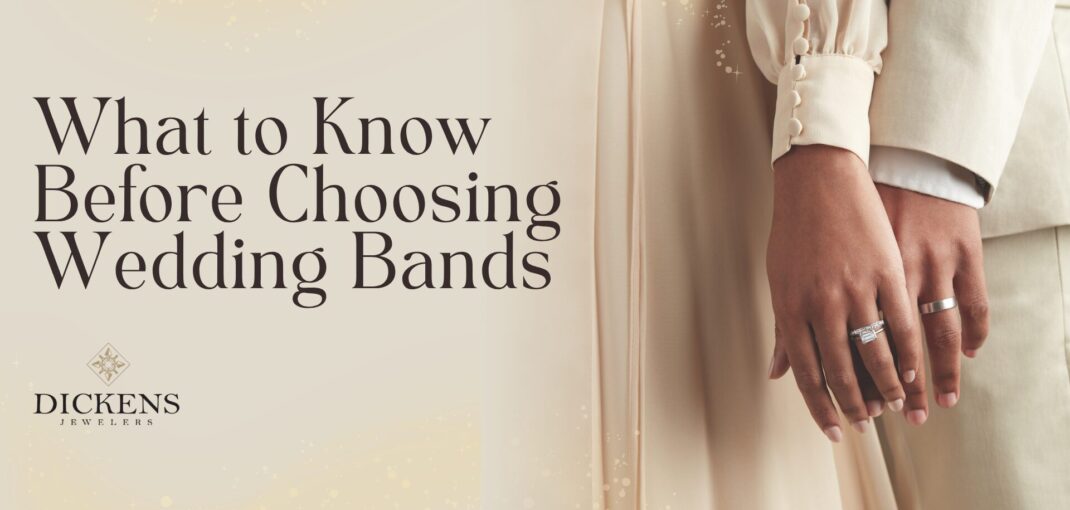
What to Know Before Choosing Wedding Bands
Choosing wedding bands is one of the most meaningful decisions you’ll make during the wedding planning process. Unlike engagement rings—which often make a bold statement—wedding bands are designed for everyday wear, symbolizing commitment, partnership, and a lifetime together. With so many styles, metals, and design options available, it’s important to make a choice that reflects both your personal style and your lifestyle. Here’s what you should know before selecting your wedding bands.Start with Lifestyle, Not Just Style
It’s easy to get caught up in how a ring looks—but how it fits into your daily life matters just as much. If you work with your hands, are active, or rarely remove your jewelry, durability should be a top priority. Simpler designs and stronger metals tend to hold up better over time and require less maintenance. On the other hand, if your lifestyle allows for more delicate pieces, you may have more flexibility with intricate designs or added stones. A wedding band should feel as natural as wearing nothing at all—comfortable, secure, and suited to your everyday routine.Choosing the Right Metal
The metal you choose affects everything from appearance to longevity. Gold (Yellow, White, and Rose) A classic choice that offers versatility and warmth. Available in different karats, gold allows you to balance durability with richness of color. Platinum Known for its strength and naturally white finish, platinum is one of the most durable options available. It’s ideal for those who want a ring that will maintain its look over time with minimal fading. Alternative Metals Metals like titanium and tungsten offer modern appeal and exceptional durability, though they may have limitations when it comes to resizing or customization. Each metal has its own characteristics—understanding those differences will help you make a confident decision.Comfort Fit vs. Standard Fit
One detail many people overlook is how the ring feels on your finger. Comfort fit bands are slightly rounded on the inside, making them easier to wear for long periods. Standard fit rings have a flatter interior and may feel tighter over time. If you plan to wear your band daily (and most do), comfort fit is often worth considering.To Match or Not to Match
Some couples prefer matching bands as a symbol of unity, while others choose styles that reflect their individual personalities.
There’s no right or wrong approach. You might choose:- Matching metals with different designs
- Complementary styles
- Completely unique rings that still feel connected
Considering Diamonds or Details
While many wedding bands are simple, others incorporate diamonds or design elements for added visual interest.
If you’re considering stones:- Think about long-term wear and maintenance
- Consider how the band pairs with an engagement ring
- Choose settings that protect the stones from daily wear
Think Long-Term
Trends come and go—but your wedding band is something you’ll wear for decades. Choosing a timeless design often ensures that your ring will feel just as meaningful years from now as it does today. That doesn’t mean it has to be plain—it just means it should feel like you, not a passing trend.Sizing Matters More Than You Think
Finger size can fluctuate due to temperature, time of day, and lifestyle. A proper fitting should:- Feel snug enough to stay secure
- Slide over the knuckle with slight resistance
- Remain comfortable throughout the day
Custom vs. Ready-Made
Some couples find exactly what they want in a showcase. Others prefer something more personal. Custom wedding bands allow you to:- Incorporate meaningful details
- Match an engagement ring perfectly
- Create something completely unique
Work with a Trusted Jeweler
Perhaps the most important decision isn’t the ring itself—it’s who you trust to guide you. An experienced jeweler can:- Help you compare options honestly
- Explain the differences between materials
- Ensure proper fit and long-term wearability
- Provide ongoing care and maintenance
Final Thoughts
Wedding bands may be simple in form, but they carry profound meaning. Take your time. Ask questions. Try on different styles. And most importantly—choose a ring that feels right every time you look down at your hand.FAQ
- When should we buy our wedding bands? It’s best to purchase your wedding bands at least 2–3 months before your wedding. This allows time for sizing, customization, engraving, or special orders without feeling rushed.
- How much should we spend on wedding bands? There’s no fixed rule. Wedding bands can range from a few hundred to several thousand dollars depending on the metal, design, and whether diamonds or custom elements are included. The right choice is one that fits both your style and your budget comfortably.
- Do wedding bands have to match? Not at all. Some couples prefer matching bands, while others choose different styles that reflect their personalities. You can still create a cohesive look by choosing similar metals or design elements.
- What is the most durable metal for a wedding band? Platinum is widely considered the most durable traditional metal for wedding bands. Alternative metals like tungsten and titanium are also extremely durable, though they may not be resizable.
- Can wedding bands be resized? Most gold and platinum rings can be resized. However, some alternative metals like tungsten and titanium typically cannot. It’s important to confirm this before purchasing.
- Should a wedding band match the engagement ring? It doesn’t have to, but many people choose a band that complements their engagement ring in metal type, style, or shape for a more unified look.
- Is a comfort fit ring worth it? For most people, yes. Comfort fit bands are designed for easier daily wear, especially if you plan to wear your ring all the time. They tend to feel smoother and less restrictive.
- Can men’s wedding bands include diamonds? Absolutely. Many men choose bands with subtle diamond accents or design details. It’s a matter of personal style—modern men’s bands offer a wide range of options.
- What width should a wedding band be? Wedding bands typically range from 2mm to 8mm in width. Narrower bands feel more subtle and lightweight, while wider bands make more of a statement. Trying on different widths is the best way to decide.
- Do wedding bands require maintenance? Yes, especially over time. Regular cleaning, occasional polishing, and inspections help maintain the ring’s appearance and ensure stones (if any) remain secure.