
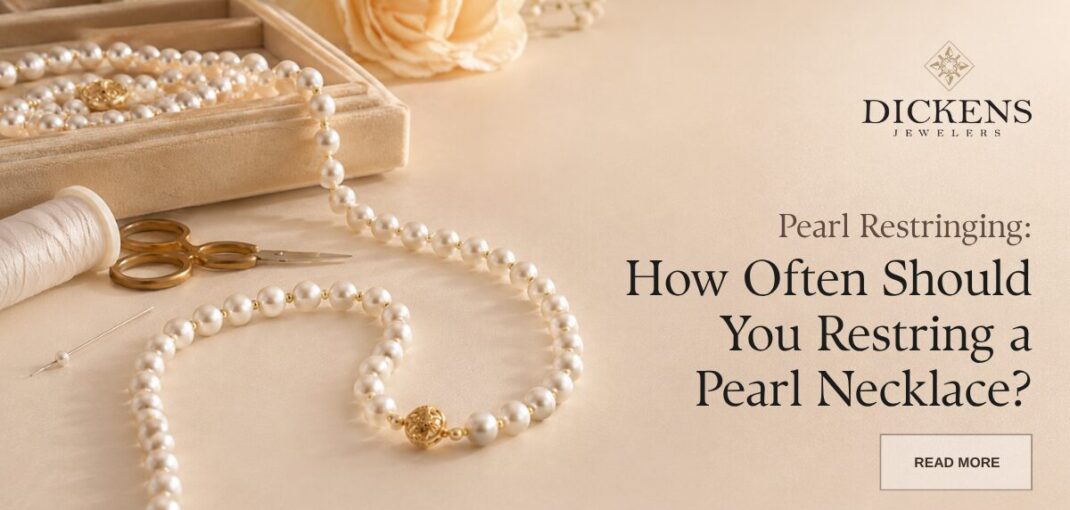
Pearl restringing is an important part of protecting a pearl necklace and ensuring it can be enjoyed for years, or even generations. While pearls themselves can last a lifetime with proper care, the silk thread holding them together will naturally weaken over time.
Few pieces of jewelry possess the timeless elegance of a pearl necklace. Whether it’s worn for special occasions, gifted to celebrate an important milestone, or passed down through generations, a strand of pearls often carries memories that are just as valuable as the pearls themselves.
While pearls can last a lifetime with proper care, the silk thread holding them together cannot.
Over time, normal wear gradually weakens the strand. The silk stretches, knots loosen, and everyday movement places increasing stress on the necklace. Unfortunately, many owners don’t realize there’s a problem until the strand breaks and pearls scatter across the floor.
The good news is that this kind of damage is almost always preventable.
Understanding when pearl restringing is needed can help preserve both the beauty of your necklace and the memories it represents.
Why Pearl Necklaces Need Restringing
Unlike gemstones mounted in rings or earrings, pearls are traditionally strung on silk thread. Between each pearl is a carefully tied knot that serves two important purposes.
First, the knots help prevent the pearls from rubbing against one another, reducing wear and preserving their delicate surface.
Second, if the strand should ever break, the knots prevent all of the pearls from falling off at once.
Although silk is remarkably durable, it naturally weakens with time. Body oils, cosmetics, humidity, and everyday movement gradually affect the fibers. Eventually, even the highest-quality strand benefits from professional pearl restringing.
Signs Your Pearl Necklace Needs Attention
Many necklaces provide subtle warning signs before failure occurs.
Knowing what to look for allows you to schedule repairs before damage becomes more serious.
Stretched Silk Thread
One of the earliest indicators is a strand that appears longer than it once did.
Silk naturally stretches with repeated wear, allowing extra space to develop between pearls. If your necklace seems looser than when it was originally purchased, it’s time to have it evaluated.
Visible Gaps Between Pearls
A properly strung pearl necklace should sit neatly together with evenly spaced knots.
If noticeable gaps appear between pearls, the silk has likely stretched beyond its intended tension.
Professional pearl restringing restores the proper spacing while improving both appearance and durability.
Loose or Missing Knots
The knots between pearls should remain firm and consistent.
If they appear loose, uneven, or begin disappearing into the drill holes, the strand has weakened and should be professionally restrung before additional stress causes it to fail.
The process of pearl care involves much more than cleaning. Proper stringing is equally important to preserving their beauty.
Discolored or Frayed Silk
Silk naturally absorbs moisture, skin oils, cosmetics, and environmental contaminants.
Over time, bright white thread may become yellowed, gray, or visibly worn. Frayed fibers are another clear indication that the strand has reached the end of its service life.
Ignoring these signs increases the likelihood of breakage.
Excessive Movement
Pearls should move gracefully along the strand without sliding excessively.
If individual pearls shift freely or rotate more than they once did, the silk has likely stretched and no longer provides adequate support.
This is one of the most common reasons customers seek professional pearl restringing.
A Worn or Weak Clasp
While the silk strand receives most of the attention, the clasp deserves inspection as well.
A clasp that doesn’t close securely or shows signs of wear can place additional stress on the necklace and increase the risk of accidental loss.
During professional restringing, the clasp can also be inspected to ensure the necklace remains secure.
How Often Should Pearls Be Restrung?
There’s no single answer because every necklace is worn differently.
As a general guideline:
- Frequently worn pearl necklaces should be professionally restrung every one to two years.
- Occasionally worn necklaces may only require restringing every three to five years.
- Family heirlooms should be inspected periodically, even if they aren’t worn often, since silk naturally ages over time.
If you’re unsure about the condition of your necklace, having it professionally evaluated is always the safest choice.
Preventive pearl restringing is almost always less expensive than replacing lost pearls after a strand breaks.
Why Professional Restringing Matters
Restringing pearls involves far more than simply replacing the thread.
Each pearl should be carefully inspected before restringing begins. A professional jeweler will examine the drill holes, identify worn or damaged pearls, evaluate the clasp, and select the appropriate silk thread for the necklace.
Every knot is tied individually by hand to create consistent spacing and proper tension.
The result is a necklace that not only looks beautiful but is prepared to withstand years of future wear.
Attempting to restring pearls without proper experience can result in uneven spacing, loose knots, damaged drill holes, or unnecessary stress on the pearls themselves.
Caring for Pearls Between Restringings
A few simple habits can significantly extend the life of your necklace.
- Put your pearls on after applying perfume, hairspray, and cosmetics.
- Wipe the pearls gently with a soft cloth after wearing them.
- Store pearl necklaces flat rather than hanging them.
- Keep pearls separate from harder gemstones that could scratch their delicate surface.
- Schedule periodic inspections even if the necklace appears to be in good condition.
Understanding the unique characteristics of natural and cultured pearls also helps owners appreciate why gentle care is so important.
Preserve the Beauty of Your Pearls
A strand of pearls is often one of the most sentimental pieces in a jewelry collection. Whether it was inherited from a loved one, received as a wedding gift, or purchased to celebrate a special occasion, its value extends far beyond its appearance.
At Dickens Jewelers, we understand the care and craftsmanship required to preserve fine jewelry. Our professional pearl restringing services help protect your necklace from unnecessary damage while ensuring it remains ready to wear for years to come.
If you’ve noticed stretched silk, loose knots, visible gaps, or other signs of wear, don’t wait until the strand breaks. A simple inspection today can help preserve a treasured piece for future generations.
Frequently Asked Questions
How often should a pearl necklace be restrung?
Pearl necklaces worn regularly should typically be restrung every one to two years. Necklaces worn occasionally may only require restringing every three to five years.
What are the signs that pearl restringing is needed?
Common signs include stretched silk, visible gaps between pearls, loose knots, frayed thread, discoloration, weakened clasps, and excessive movement between the pearls.
Can I wear my pearls if the thread is stretched?
It’s best to avoid wearing a necklace with stretched or weakened silk. Continuing to wear it increases the risk of the strand breaking and losing pearls.
Why are knots tied between each pearl?
Knots help prevent pearls from rubbing against one another, reducing wear. They also prevent all of the pearls from falling off if the strand breaks.
Is pearl restringing worth it?
Absolutely. Professional pearl restringing helps preserve the beauty, security, and longevity of your necklace while protecting sentimental and valuable pearls from unnecessary loss.